
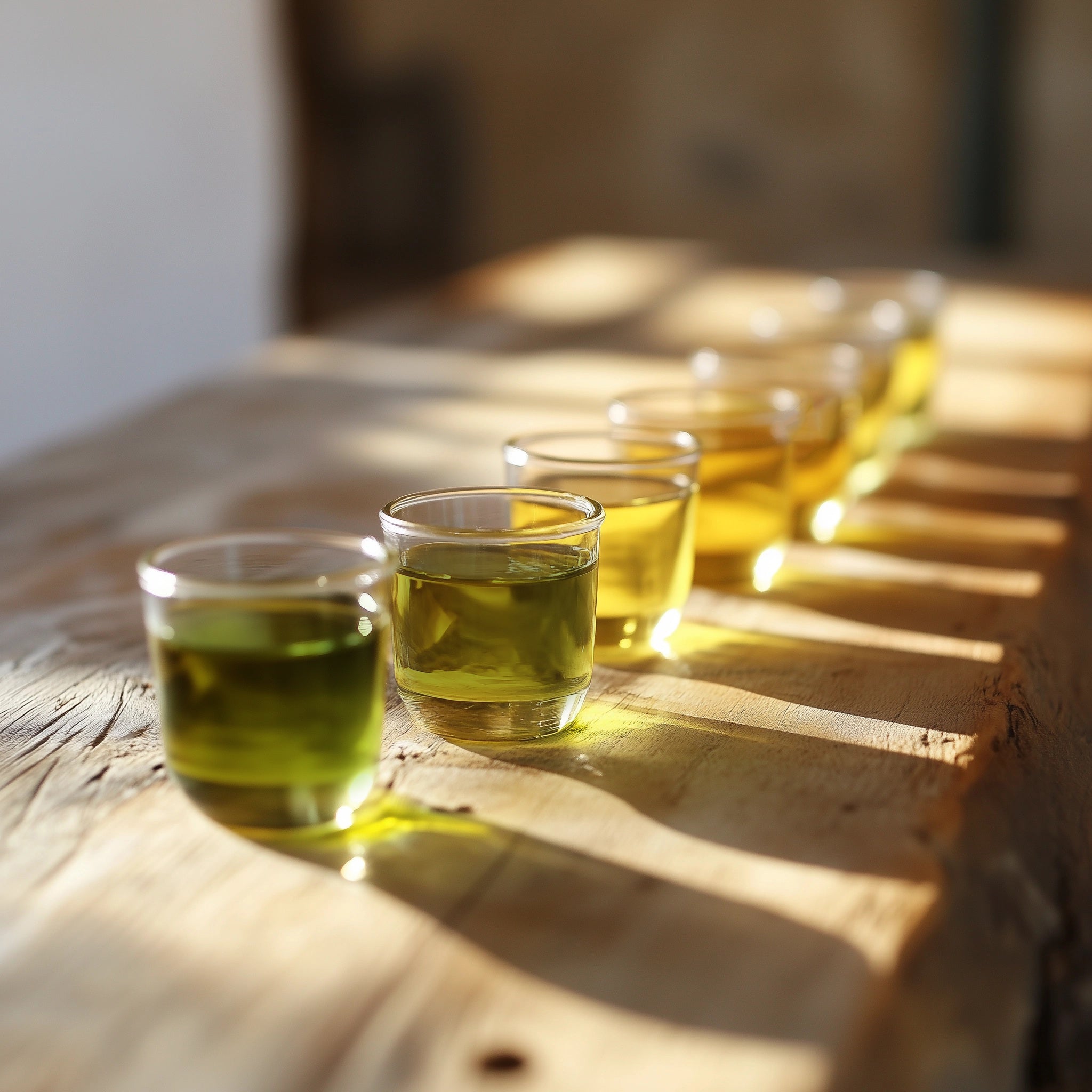
What is extra virgin olive oil, and why is it the best choice for your kitchen? If you're looking to buy high-quality olive oil, you've come to the right place. In this comprehensive guide, you'll learn everything about the highest olive oil grades and how to find the best extra virgin olive oil for your needs.
What is extra virgin olive oil? The definition of premium class
Extra virgin olive oil is the highest declared quality grade for olive oil. The term is composed of:
- "Native" = natural, untreated
- "Extra" = highest quality level
The EU definition in detail
According to EU Regulation 1234/2007, extra virgin olive oils must be "obtained exclusively by mechanical or other physical processes under conditions that do not lead to deterioration of the oil."
Every label must read: "First class, directly from olives, obtained exclusively by mechanical means."
Extra virgin olive oil vs. other grades: The quality comparison
| Quality class | Acidity | Production | Quality |
|---|---|---|---|
| Extra virgin olive oil | Max. 0.8% | Mechanical, cold | Highest |
| Extra virgin olive oil | Max. 2.0% | Mechanically | Good |
| Olive oil (refined) | Max. 1.0% | Chemically treated | standard |
| Olive oil blend | Max. 1.0% | Mixed | base |
Buy premium olive oil: These quality criteria are crucial
1. Acidity - The most important quality indicator
- EU standard: Maximum 0.8%
- Premium quality: 0.1% - 0.4%
- Top oils: Less than 0.2%
Why is acidity important? The lower the acidity, the fresher the olives were during processing and the higher the quality of the olive oil.
2. Peroxide value - making freshness measurable
- EU limit: Maximum 20 meq O₂/kg
- Premium oils: Less than 10 meq O₂/kg
3. Harvest time and processing
Standard extra virgin olive oil:
- Processing within 24 hours
- Pressing temperature up to 27°C
Premium extra virgin olive oil:
- Processing within 4-8 hours
- Pressing temperature 18-21°C
- Higher polyphenol content
"Cold-pressed" - marketing or quality feature?
The truth about "cold-pressed": This term is obsolete today, as "hot pressing" no longer exists. All extra virgin olive oils are pressed at controlled temperatures below 27°C.
What you should pay attention to instead:
- Exact pressing temperature (the lower the better)
- Processing time after harvest
- Organic certification
- Designation of origin
Best extra virgin olive oil: How to recognize premium quality
Taste and aroma - The sensory characteristics
A high-quality extra virgin olive oil should be:
- ✅ Fruity - Intense olive aroma
- ✅ Bitter - Light to medium bitterness
- ✅ Spicy - Peppery note in the finish
Primary aromas of premium olive oil:
- Freshly mown grass
- Green unripe olives
- Artichokes
- tomato leaf
- Almonds
Secondary aromas:
- Wild herbs
- Green apple
- rosemary
- Black pepper
- Citrus fruits
Italian olive oil vs. Spanish vs. Greek: Understanding origins
Italy - Tradition and Diversity
- Regions: Tuscany, Liguria, Sicily
- Characteristics: Complex, elegant, peppery
- Popular varieties: Frantoio, Leccino, Taggiasca
Spain - World's largest producer
- Regions: Andalusia, Catalonia
- Characteristics: Fruity, mild to intense
- Popular varieties: Picual, Hojiblanca, Arbequina
Greece - Ancient Tradition
- Regions: Crete, Peloponnese
- Characteristics: Robust, grassy, intense
- Popular varieties: Koroneiki, Kalamata
Organic extra virgin olive oil: Why the investment is worth it
Benefits of organic olive oil:
- No pesticides or chemical fertilizers
- Sustainable cultivation
- Often higher polyphenol content
- Strict quality controls
Frying with extra virgin olive oil: myths and facts
Can you fry with olive oil? YES!
- Smoke point: Up to 180°C (filtered olive oil)
- Health benefit: Polyphenols protect vitamins during frying
- Disadvantage: Aroma is lost when heated
Tip: Use cheaper extra virgin olive oil for frying and premium oils for salads and dressings.
Buying olive oil online: What you should pay attention to
Recognizing reputable providers:
- ✅ Detailed product descriptions
- ✅ Analysis values (acidity, peroxide value)
- ✅ Harvest year and origin information
- ✅ Dark bottles or canisters
- ✅ Customer reviews and certificates
Red flags when buying online:
- ❌ Extremely low prices
- ❌ No indication of origin
- ❌ Sold in transparent bottles
- ❌ Exaggerated health claims
Premium olive oil Germany: The best sources
Online specialists
- Specialist shops with a wide selection
- Direct imports from producers
- Regular quality checks
Local delicatessens
- Personal advice
- Tasting opportunities
- Often exclusive varieties
Weekly markets
- Direct producer contacts
- Try before you buy
- Seasonal specialties
Olive oil storage: How to preserve the quality
Optimal storage conditions:
- 🌡️ Temperature: 14-18°C
- 🌑 Light: Absolute darkness
- 💨 Air: Hermetically sealed
- 📅 Shelf life: 18-24 months from harvest
Olive oil test: How to check the quality yourself
The home test in 3 steps:
- Sight: Golden yellow to green, clear (not cloudy)
- Smell: Fruity, without off-notes
- Taste: Fruity-bitter-spicy, no rancid taste
Warning signs of poor quality:
- Musty or rancid smell
- Greasy consistency without taste
- Exclusively sweet taste
- Scratchy throat (too oxidized)
The health benefits of premium olive oil
Why is extra virgin olive oil so healthy?
High-quality ingredients:
- Polyphenols: Powerful antioxidants
- Vitamin E: Cell protection
- Monounsaturated fatty acids: cardiovascular health
- Oleocanthal: Natural anti-inflammatory agent
Scientifically proven effects:
- Lowering cholesterol levels
- Anti-inflammatory
- Supporting heart health
- Protection against oxidative stress
Price-performance: How much does good olive oil cost?
Price categories at a glance:
| Quality | Price per liter | Characteristics |
|---|---|---|
| Supermarket standard | 5-15€ | Decent quality |
| Premium olive oil | 20-40€ | High-quality varieties |
| Top-quality olive oil | 40-80€+ | Exclusive producers |
Rule of thumb: Good extra virgin olive oil should cost at least €15-20 per liter.
Frequently asked questions about extra virgin olive oil
How long does olive oil last?
Once opened, 6-12 months, sealed, up to 24 months from harvest.
Can olive oil go bad?
Yes, oxidation causes it to become rancid and lose flavor and nutrients.
What bottle size is optimal?
For home use, 250-500ml bottles are ideal - the oil is used up faster and stays fresh.
Does olive oil need to be stored in the refrigerator?
No, a cool, dark cupboard is perfect. It gets cloudy in the refrigerator (but not bad).
Conclusion: Your path to the perfect extra virgin olive oil
The most important findings:
- Extra virgin olive oil is the highest quality
- Acidity below 0.4% indicates premium quality
- Organic oils often offer the best quality-price ratio
- Dark bottles and cool storage are essential
- Taste should be fruity, bitter and spicy
Our tip: Try different varieties and countries of origin to find your personal favorite. A good extra virgin olive oil is an investment in taste and health.
Looking to buy high-quality extra virgin olive oil? Visit olivenolmarkt.de and discover our selection of premium olive oils from Europe's best growing regions.