
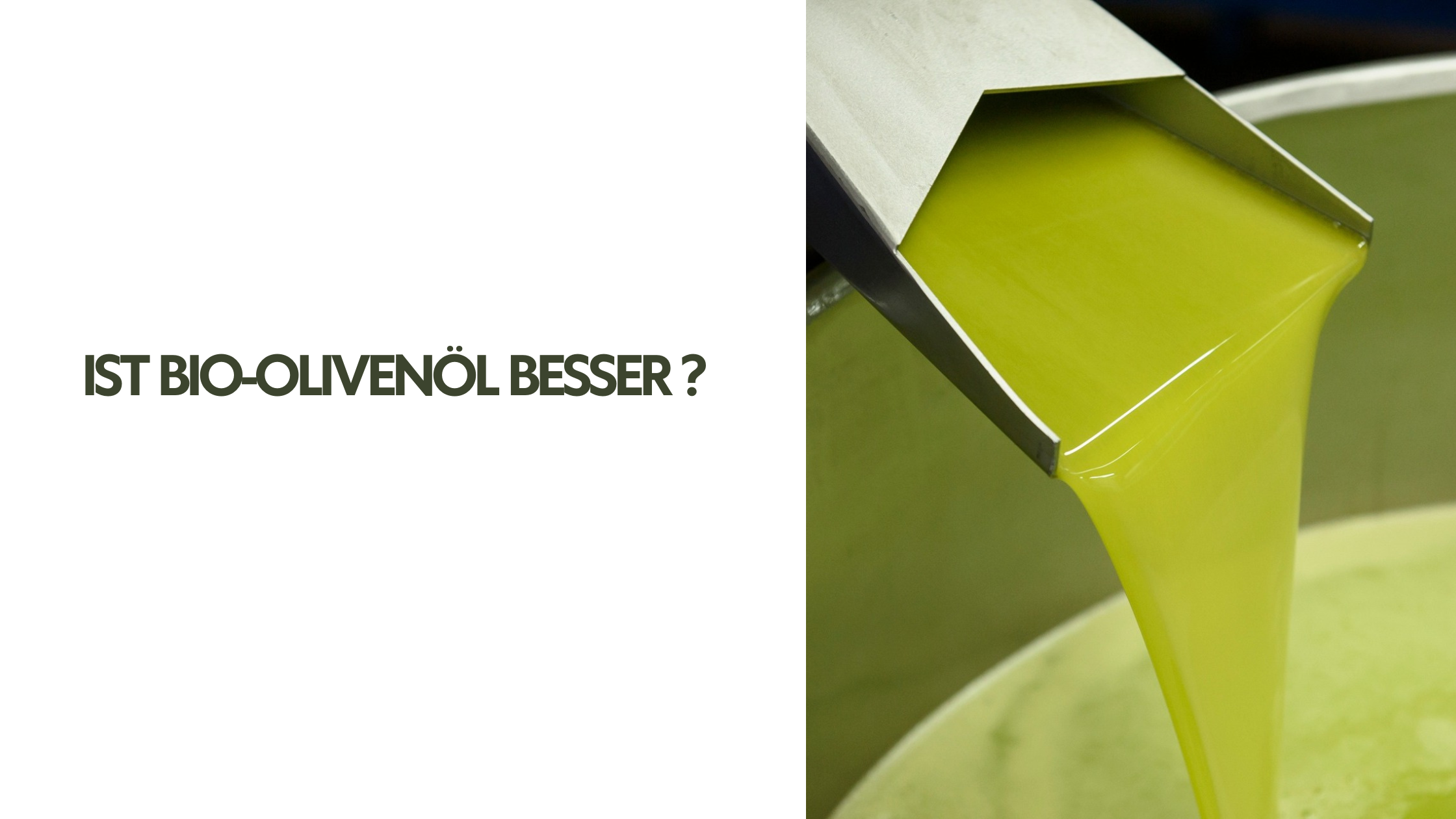
Is organic olive oil better? The ultimate comparison between organic and conventional olive oil
Updated: August 2025 | Reading time: 8 minutes
What is the difference between organic olive oil and conventional olive oil?
If you're wondering, "Is organic olive oil better?" you're not alone. This question is increasingly on the minds of consumers who value quality and sustainability. The main difference lies in the cultivation method: Organic olive oil is produced without synthetic pesticides, chemical fertilizers, or genetically modified organisms.
The most important differences at a glance:
Organic olive oil:
- Cultivation without synthetic pesticides and herbicides
- No chemical fertilizers
- Strict EU organic certification required
- Often more traditional cultivation methods
- More environmentally friendly production
Conventional olive oil:
- Use of approved pesticides possible
- Use of chemical fertilizers
- Less strict requirements
- Often higher yields
- Usually cheaper price
Is organic olive oil healthier than conventional olive oil?
There is no general answer to this question, but there are important aspects to consider:
Pesticide residues
Organic olive oil has been proven to contain fewer pesticide residues. Studies show that conventional olive oils can, in rare cases, contain traces of pesticides, although these are usually below legal limits.
Nutrient content
The difference in nutritional content between organic and conventional olive oil is minimal. Both contain the valuable monounsaturated fatty acids and antioxidants like vitamin E and polyphenols that make olive oil so healthy.
Taste and quality
Many consumers report a more intense, natural flavor in organic olive oil. This may be due to the more traditional farming methods and more careful processing.
Why is organic olive oil more expensive?
There are several reasons for the higher price of organic olive oil:
- Lower yields : Without chemical fertilizers, harvests are often smaller
- Complex certification : Organic labels require regular checks
- More labor-intensive methods : Manual weed control instead of herbicides
- Longer conversion period : The conversion to organic farming takes 3 years
- Higher production costs : Natural pest control is more expensive
Who benefits from organic olive oil?
Organic olive oil is particularly recommended for:
- Families with children : Minimal pesticide exposure
- Environmentally conscious consumers : Sustainable cultivation
- Quality-oriented chefs : Often more intense taste
- People with allergies : Fewer chemical additives
- Fans of traditional farming methods : supporting small producers
What should you pay attention to when buying?
Recognizing organic labels
- EU organic logo : Green leaf with stars
- German organic labels : Bioland, Demeter, Naturland
- Indication of origin : "EU agriculture" or specific country
Quality features
- Cold pressing : "Extra virgin" or "Extra virgin"
- Harvest date : The fresher, the better
- Dark bottle : protection from light
- Region of origin : Well-known olive oil regions such as Tuscany, Andalusia
Frequently Asked Questions
Is every expensive olive oil automatically organic?
No, price alone is not an indicator of organic quality. Always look for the relevant certifications.
Can you taste the difference?
Many people can tell a difference in taste, with organic olive oil often being described as more natural and intense.
Does organic olive oil last longer?
Shelf life depends primarily on storage, not on the cultivation method. Both varieties should be stored in a cool, dark place.
Is organic olive oil worth using for frying?
For high temperatures, you can also use conventional olive oil. Organic olive oil is especially effective in cold cooking.
Our conclusion: Is organic olive oil better?
The answer depends on your priorities. If you value environmental protection, minimal pesticide use, and supporting sustainable agriculture, organic olive oil is the better choice. Both varieties are beneficial from a health perspective, as the basic nutrients are identical.
For everyday use and on a tight budget, high-quality conventional olive oil can be a good alternative. Quality is more important than the cultivation method: Look for "extra virgin," dark bottles, and a recent harvest date.
Our tip : Try both varieties and decide for yourself whether the difference in taste is worth the extra cost. Your palate and your preferences will ultimately determine which olive oil is best for you.
Do you have questions about organic olive oil or would you like to try high-quality olive oils? At OlivenölMarkt.de, you will find a carefully curated selection of premium organic olive oils and top-quality conventional olive oils from Europe's best growing regions. All our oils are sourced directly from selected producers and undergo strict quality controls.